

Online depo 10k has grown from a small category of computer entertainment into a worldwide digital industry. Today, people of different ages and backgrounds use computers, consoles, and smartphones to play games with others across the internet. These experiences combine competition, teamwork, communication, creativity, and technology in ways that have transformed the meaning of gaming.
The development of faster networks, powerful devices, and sophisticated software has made online games increasingly accessible. Players can enter virtual worlds, participate in competitive matches, communicate with friends, and follow gaming communities without needing to be in the same physical location.
The Changing Meaning of Gaming
Gaming was once primarily an individual activity. Players usually interacted with a game through a local device and followed content that had already been created by developers.
Internet connectivity changed this model. Games could now involve real people whose decisions influenced the experience. Every match could become different because players brought their own skills, strategies, and personalities.
This shift turned gaming into a dynamic form of entertainment that could continue evolving long after release.
A Global Audience
Online gaming has removed many geographical boundaries. A player can join a match with someone from another city, country, or continent within moments.
This international nature has created diverse gaming communities. Players encounter different languages, cultures, and playing styles while participating in shared digital experiences.
For many users, this global connectivity is one of the most exciting aspects of online gaming.
Different Ways to Play
The online gaming industry offers something for almost everyone. Competitive action games focus on quick reactions and tactical decisions. Strategy titles require players to think ahead and manage resources.
Role-playing games provide opportunities to explore detailed fictional worlds and develop characters. Sports games allow fans to recreate familiar competitions, while racing games provide fast-paced challenges.
Casual games offer simpler experiences for people who want short and accessible entertainment.
Multiplayer Interaction
Multiplayer gameplay is one of the defining characteristics of online gaming. Players can cooperate with teammates, compete against opponents, or participate in large shared environments.
Communication is particularly important in team-based games. Players often need to share information, coordinate movements, and develop strategies.
This interaction makes multiplayer gaming more unpredictable and engaging than many traditional forms of digital entertainment.
Building Digital Friendships
Online gaming has become an important social activity for many people. Friends can use games as virtual meeting places where they spend time together while participating in shared activities.
Players may also form new friendships through gaming communities. Repeated cooperation can create strong connections between people who initially met as strangers.
These relationships demonstrate that online games can serve social purposes as well as recreational ones.
The Importance of Competition
Competition gives many online games their long-term appeal. Players can compare their abilities through rankings, statistics, tournaments, and leaderboards.
A competitive player may spend considerable time practicing and studying gameplay. Improving performance often requires patience, strategic thinking, and the ability to learn from mistakes.
This progression can give players a sense of achievement as they move from beginner levels toward more advanced competition.
Mobile Gaming Changes Accessibility
Smartphones have dramatically expanded access to online gaming. People can now play multiplayer games without purchasing a dedicated gaming system.
Mobile games range from simple casual titles to sophisticated competitive experiences. Many support real-time multiplayer matches and social features.
Because smartphones are widely available, mobile gaming has introduced online entertainment to audiences that may not have previously considered themselves gamers.
The Growth of Esports
Online gaming has created a professional competitive scene known as esports. Professional players compete in organized leagues and tournaments where they demonstrate advanced skills and teamwork.
Esports has also created an industry around professional competition. Teams may employ coaches, analysts, managers, and support staff to help players perform at their best.
Fans can watch competitions through live broadcasts, highlights, and recorded matches, making esports another form of digital entertainment.
Gaming and Live Streaming
Live streaming has changed the way audiences interact with games. Instead of only playing, people can watch others play in real time.
Streamers often provide commentary, entertainment, tutorials, and competitive analysis. Viewers can communicate with creators through live chats, creating interactive communities.
Gaming content has therefore become a major part of the online entertainment ecosystem.
Communities Beyond the Game
Online gaming communities often continue to exist outside the actual game. Players use discussion platforms and social networks to exchange strategies, discuss updates, and share experiences.
Some communities produce detailed guides that help new players learn difficult mechanics. Others create fan art, videos, memes, and other creative material.
These communities can make players feel connected to something larger than the individual game.
Technology Supporting Online Worlds
Modern online gaming depends on advanced technology. Game servers process information from players and maintain shared environments.
High-speed internet reduces communication delays, which is particularly important for competitive games. Powerful graphics hardware allows developers to create detailed environments and realistic effects.
Cloud computing also provides infrastructure for games that need to support large numbers of simultaneous players.
Artificial Intelligence and Future Development
Artificial intelligence is becoming increasingly useful in game development. AI can help create more responsive computer-controlled characters and assist with certain development tasks.
In the future, artificial intelligence could enable games to respond more closely to individual player behavior. Difficulty levels, character interactions, and challenges could potentially change dynamically.
These developments may make games feel more personalized and unpredictable.
Virtual Reality and Immersion
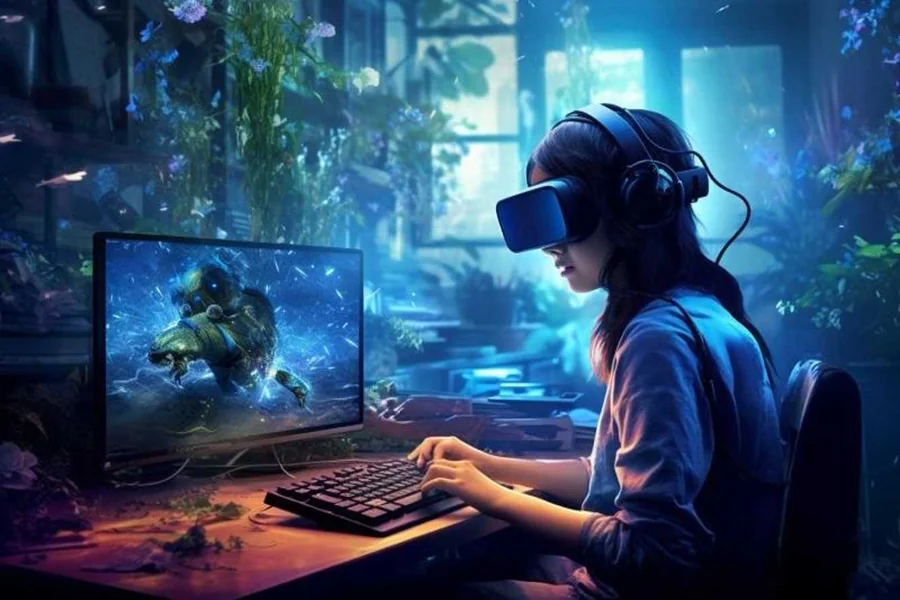
Virtual reality offers another possible direction for online gaming. VR headsets allow players to view and interact with digital environments in a more immersive way.
Multiplayer virtual reality can create shared spaces where players communicate and interact through digital representations of themselves.
Although VR technology still has limitations, continued development could make immersive multiplayer gaming increasingly common.
Positive Effects of Gaming
Online gaming can provide several positive experiences when used responsibly. Team-based games encourage communication and cooperation, while strategy games can involve planning and decision-making.
Creative games may allow users to design buildings, environments, characters, and other digital objects.
Gaming can also provide relaxation and entertainment. For many people, playing with friends is an enjoyable way to spend free time.
Challenges of Online Gaming
Despite its benefits, online gaming requires responsible use. Excessive gaming may interfere with sleep, physical activity, education, employment, or personal relationships.
Online communities can also expose players to toxic behavior, harassment, scams, or inappropriate content.
Players should understand how privacy settings, reporting systems, and blocking features work. These tools can help create safer online experiences.
Protecting Gaming Accounts
Security is increasingly important as gaming accounts become connected to digital purchases and personal information.
Players should create strong and unique passwords and use two-factor authentication when available. Suspicious links, unofficial downloads, and requests for account information should be treated carefully.
Good security habits can reduce the risk of losing access to valuable accounts.
Maintaining a Balanced Routine
Gaming is healthiest when it remains one part of a balanced lifestyle. Players should make time for sleep, exercise, work, education, family, and other interests.
Regular breaks can be useful during longer sessions. Setting reasonable limits can also help prevent gaming from interfering with important responsibilities.
A balanced routine allows people to enjoy gaming without allowing it to control their daily schedule.
The Economic Power of Gaming
Online slot bonus supports a significant digital economy. Developers and publishers generate income through game sales, subscriptions, downloadable content, advertisements, and digital purchases.
The wider industry also supports hardware manufacturers, esports organizations, streaming services, content creators, advertisers, and professional gaming teams.
As the market expands, more careers are emerging around gaming and digital entertainment.
What the Future Holds
The future of online gaming is likely to be shaped by continued technological innovation. Cloud services may allow players to access advanced games on a wider range of devices.
Artificial intelligence could create more adaptive gameplay, while virtual and augmented reality may provide new ways to interact with digital worlds.
Online games may also become increasingly social, combining gameplay with virtual events, communication, creative activities, and community experiences.
Conclusion
Online gaming has transformed the traditional gaming experience into a connected global activity. It provides opportunities for competition, cooperation, social interaction, creativity, and entertainment.
The industry continues to evolve as technology improves and players demand richer experiences. Smartphones, cloud computing, artificial intelligence, high-speed networks, and immersive technologies are all contributing to this development.
While responsible gaming and online safety remain important, the continued growth of online gaming demonstrates its lasting appeal. As digital experiences become more sophisticated, online gaming will continue to influence entertainment, technology, and social interaction around the world.
